Login
AI & TECHNOLOGY / 04
The Stack

TECHNOLOGY

| AI · THE SPATIAL AGENT STACK |

The science layer,
underneath the agent

How spatial intelligence actually works — the agent loop, the eight primitives, the optimization engine, the ontology system. The stack that makes Jax behave like one platform across every domain.

SECTION 04 · AI & TECHNOLOGY

INTRODUCTION

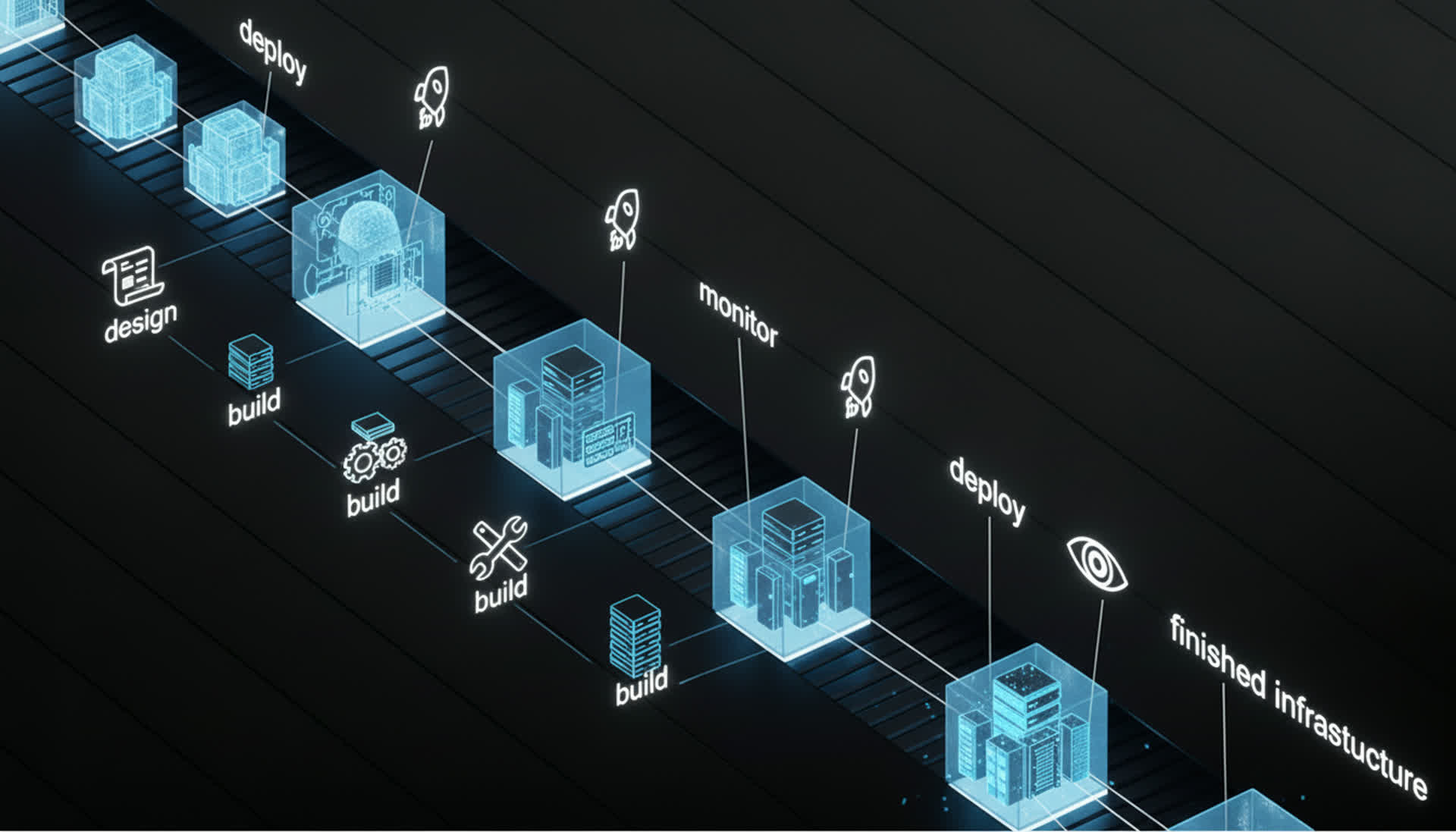
Engineering the physical world is the most expensive thing humans do. Surveying takes years. Designing a single network slips through quarters. The crews come last and finish even later. Nexma collapses the loop into something the agent runs end-to-end — sensing, reasoning, designing, dispatching, closing — at the speed of compute.

And this is what that changes:

Engineering becomes a runtime, not a calendar.

[ THE RUNTIME ]

Inside Jax's Agent Computer.

Every decision Jax makes runs on a dedicated optimization engine — MIP, VRP, constraint programming, simulation, and heuristic search dispatched in milliseconds. The Agent Computer is what makes spatial intelligence feel instant.

| AGENT COMPUTER · ENGINEERING ENGINE |VIDEO 001

5 Core Goals
for Autonomous
Engineering

  1. 01

    Collapse the 5-year infrastructure lifecycle to weeks.

  2. 02

    Run design, dispatch, and field execution from one platform.

  3. 03

    Operate across telecom, water, electric, and 5G with a single ontology.

  4. 04

    Replace seat-based GIS with a session-based compute fabric.

  5. 05

    Prove autonomous engineering at the scale of a real grid.

Autonomous Engineer

[ Jax · V1.0 · Production · Multi-Domain ]

Jax for Engineering ingests every spatial signal a domain offers — sensors, surveys, satellite, sensor fusion — and produces a complete design ready for the field. What follows is the spec sheet for the autonomous engineer.

  • Throughput /1,000 mi network designed per 24h
  • Latency /Sub-second per route decision
  • Domains /FTTH · Water · Electric · 5G
  • Ontology /Swappable per project
  • Tools /Read · Write · Edit · Glob · Grep · Run · Solve
  • Solvers /MIP · VRP · CP · Simulation · Heuristic
  • Lifecycle /~5 years → ~5 weeks
  • Deployments /Telecom · Utilities pilots
[ Output Velocity vs. Manual Workflows ]
[ Autonomous Engineer ]
The Eight Primitives

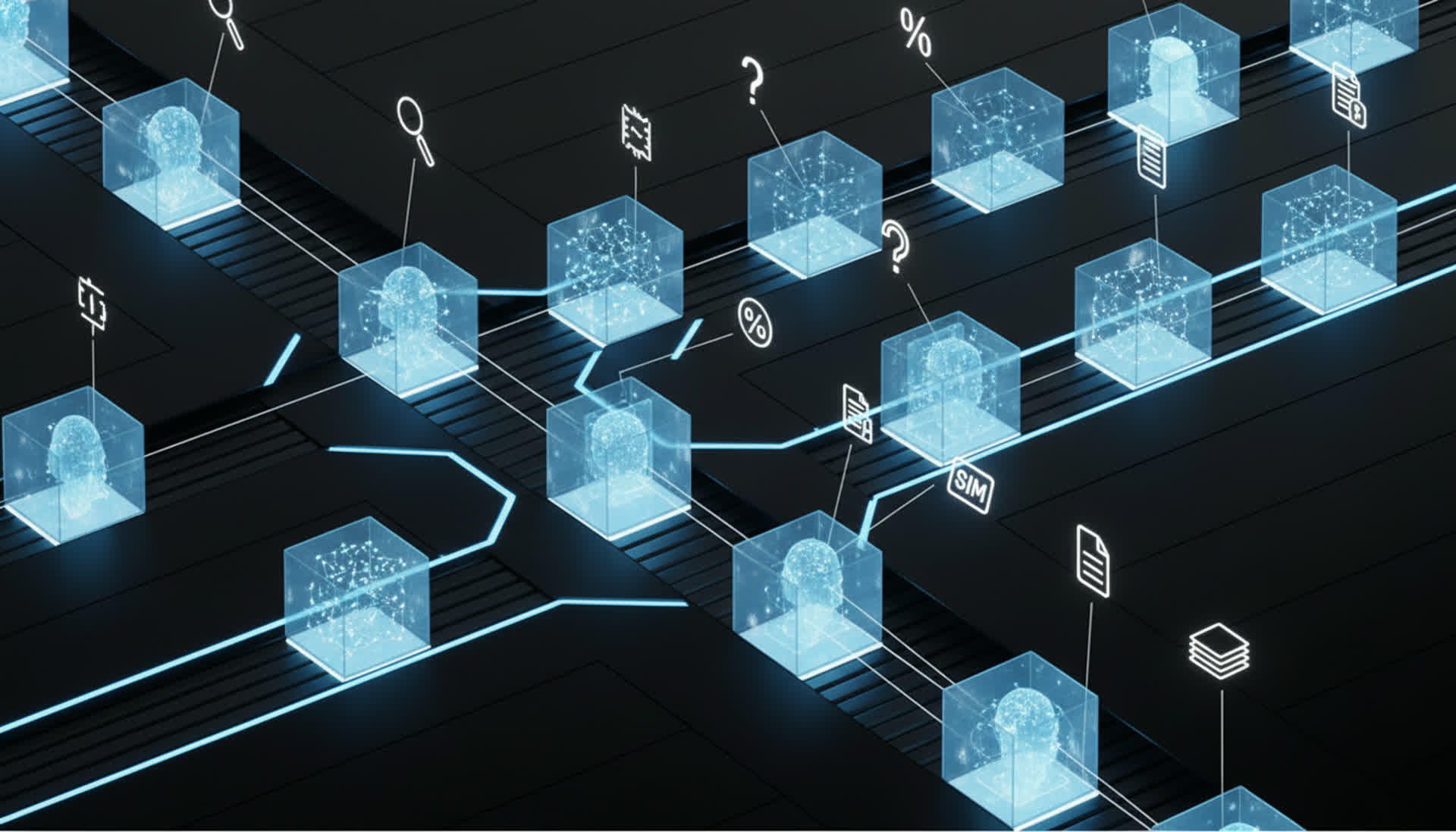
Jax operates the world the way a developer operates a filesystem. Eight generic primitives let one platform design fiber networks today and water grids tomorrow without rewriting the agent.

The domain comes from the ontology. The capability comes from the tools. When the schema changes, the agent doesn't.

  • ReadReads any file in the Codex with offset / limit pagination.
  • WriteCreates or overwrites a file with full content.
  • EditPatches an existing file in place, find-and-replace style.
  • DeleteRemoves files by path or pattern.
  • GlobFinds files by pattern across the Codex.
  • GrepSearches file contents at planetary scale.
  • RunDeterministic geo-math — haversine, centroid, snap, route.
  • SolveOptimization dispatch — MIP, VRP, CP, simulation, heuristic.

[ Codex · 8 Primitives ]

The Foundations

Five pieces. One operating system for spatial intelligence.

04AThe spatial filesystem

Nexma DataStore

Nexma DataStore — the Codex — is a persistent, queryable filesystem for the physical world. Every entity Jax knows about — every closure, every transformer, every aircraft, every ship — is a file. Every relationship is a link. Every change is a diff.

Domain knowledge is decoupled from the agent. Jax reads and writes Codex paths through eight generic primitives; the schema lives in the Ontology, the operations live in Skills, the audit trail lives in Branches. One filesystem, every domain.

Persistence
Postgres-backed, audited
Access
Eight generic primitives — Read · Write · Edit · Delete · Glob · Grep · Run · Solve
Scope
Org · Project · Session
04BThe world model

The Ontology

An Ontology defines what the world is made of. Entities, relationships, properties, and the constraints that bind them. Load FTTH — Jax designs fiber. Load water — Jax designs water. Same agent, different world.

Ontologies are typed, versioned, and swappable per project. Constraints are first-class — splice ratios, voltage drop, pressure budgets, regulatory geometry — and validated on every write. The agent never hardcodes a domain; the domain is the Ontology.

Form
Typed graph — entities, links, properties, constraints
Authoring
ReactFlow canvas · natural-language maker
Distribution
Templates per vertical — fork, extend, govern
Ontology graph showing entities and relationships
04CAgent capability packs

The Skill System

A Skill is a bundle of capability targeted at an Ontology. Prompt, tool bindings, validators, examples, and the cinematic UI surface that goes with them. One project binds one Ontology and any number of Skills.

Skills are versioned the way code is versioned — semver, with major bumps when capabilities are removed. They compose: Aerial Investigation, Cyber Threat, SIGINT Geoposition, FTTH Network Design — each one a swappable expansion of the same agent.

Authoring
Sectioned editor — identity, prompt, tools, validators, examples
Versioning
Semver — major / minor / patch
Distribution
Org library · marketplace-ready
04DFork, diverge, merge any world

Spatial Branches

Git for the physical world. Branch the Codex to explore an alternative — a different cabinet layout, a different patrol route, a different incident scenario — without disturbing the truth. Merge the branch back when the plan is approved.

Every spatial decision is reversible. Every alternative is durable. Reviewers see exactly what changed — entities added, relationships rewired, constraints violated — the same way a code reviewer sees a pull request. Main is the operational truth; branches are the imagination.

Model
Main · feature branches · merge requests
Granularity
Entity-level diffs with constraint validation
Audit
Full history per branch, per file, per author
04EConstrained optimization

The Math Engine

Spatial intelligence is constrained optimization. The Math Engine is the solver layer Jax dispatches to: mixed-integer programming, vehicle routing, constraint programming, simulation, heuristic search — six families, one interface.

Small problems run in the browser via GLPK and bespoke heuristics. Large problems route to the Python solver server on Railway. Jax chooses the family, formulates the problem from the Codex, and explains the answer in plain language.

Families
MIP · VRP · CP · Simulation · Heuristic · Graph
Dispatch
Browser ↔ Solver Server — automatic
Explainability
Self-correcting, citation-traced
Nexma DataBase

Every object's position, queryable through time.

04FThe spatial-temporal engine

Nexma DataBase

A world full of moving things produces a firehose — fleets, crews, drones, aircraft, vessels, every sensor on the ground. General-purpose databases buckle under it and bill you for the privilege. So we built our own: a purpose-built engine that stores each position as a 34-byte delta and keeps the whole moving world live, historical, and replayable on one timeline.

It runs in-process with the telemetry gateway — no round trip to a separate database tier — holding the hot window in memory while a delta log persists the rest. Rewind to any instant and the full picture reconstructs in milliseconds. From a single edge node to the global feed, the same engine carries live position, deep history, and replay, and projects it straight into the Codex.

Per point
34 bytes — a delta, not a row
Density
~30M positions per gigabyte
Ingest
30k updates/sec/node — one disk write/sec
History
Point-in-time reconstruction in ~13ms
Economics
~98% lower cost than a general-purpose DB
Durability
≤1 second lost on failover
Ancestral Stack
Influences

Optimization Theory

  • The math engine — MIP, VRP, constraint programming, simulation, heuristic search — that has powered industrial optimization since the 1960s.
  • Decades of solver research (CPLEX, Gurobi, OR-Tools) finally usable from inside an agent loop, not a desktop ILP.
  • Nexma routes solver dispatch through a hybrid browser/server runtime — in-page GLPK for small problems, Railway-hosted server for the rest.
  • Gives Jax the ability to commit to a globally-optimal answer, not just a plausible one.

Foundation Models

  • The agent paradigm — read, reason, decide, act — proven first on text by frontier labs.
  • The 8-primitive tool set Jax uses is the same pattern Claude uses for code: Read, Write, Edit, Glob, Grep.
  • Nexma keeps the agent loop generic and pushes domain knowledge into ontology + skills, not into the agent.
  • Gives Jax the ability to reason about a new domain by loading a schema, not retraining a model.