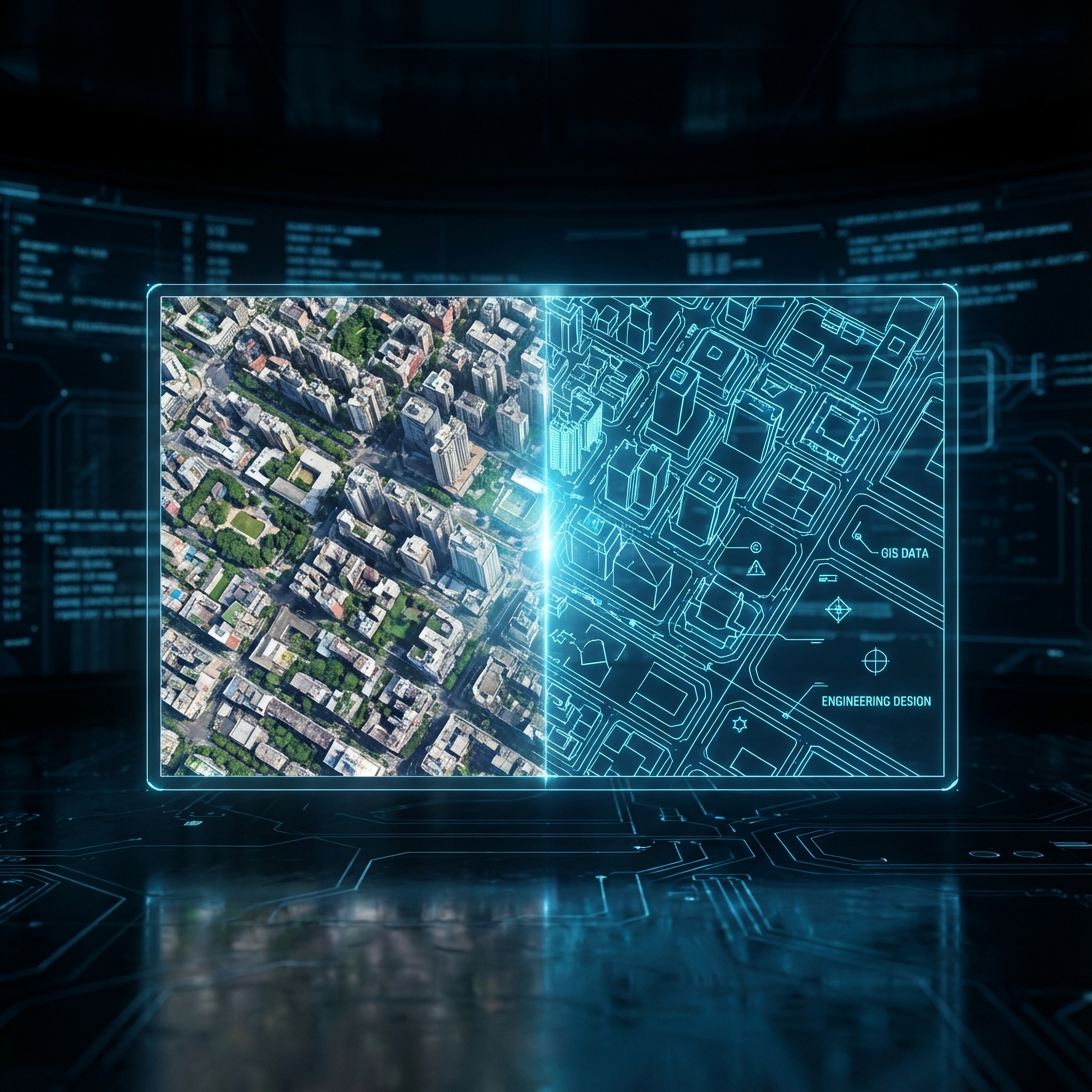
SPATIAL GENERAL INTELLIGENCE
| A NEW CATEGORY OF AI |
Spatial General Intelligence,
from first principles
Bringing AI to the physical world is not a problem the software era solved. It is the next era's defining problem. And without intervention, the physical world will keep falling behind every other layer of intelligence we've built.
DATA SUBSET 009

AI hasn't reached the physical world.
Nexma is the company that does.
Of Spatial Work
Is Still Manual
Of Spatial Decisions
Lack Live Data

The gap between what AI can read and what it can act on widens every year. Software, language, and code now move at near-zero cost. The systems that build, defend, and operate the physical world still move at the speed of permits, trucks, and clipboards.
Nexma closes that gap. Our agents read the world through space, geometry, and signal — and act on it at the speed of compute, across every domain that depends on the ground beneath it.
Nexma is the company building Spatial General Intelligence — and the closest anyone has come to making the physical world programmable, queryable, and answerable to intent.
Yesterday's Definition:
Spatial Intelligence
by the Book
Wikipedia officially defines
spatial intelligence as:

“the ability to think
in three dimensions and
visualize spatial
relationships with the
mind's eye.”
That is the cognitive-psychology definition — intelligence as the mind's ability to picture space. It is neither accurate nor comprehensive enough to describe what Nexma is building.
For Nexma, spatial intelligence is the inverse: it is software's new ability to act in space — to read the world through sensors, reason through agents, and respond through machines that move at the speed of compute.
the physical world at the speed of software.
SPATIAL INTELLIGENCE
REDEFINED
The modern utility of spatial intelligence is to put AI behind every act that touches the physical world — every route, every grid, every survey, every decision made on the ground.
Thus we arrive at a new definition of spatial intelligence — written by Nexma and the agents already running it across telecom, energy, defense, and every other layer the world depends on.
The NewDefinition of Spatial Intelligence
spatial general intelligence
[SPEY-shuhl JEN-er-uhl in-TEL-i-juhns]noun.
The class of artificial intelligence capable of operating directly on the physical world — reading it through sensors, reasoning about it through agents, and acting on it through machines that move at the speed of compute. The capability that closes the historical gap between digital intelligence and the operational world that everything else depends on.
Bringing intelligence to the physical world today.
Sensing the World
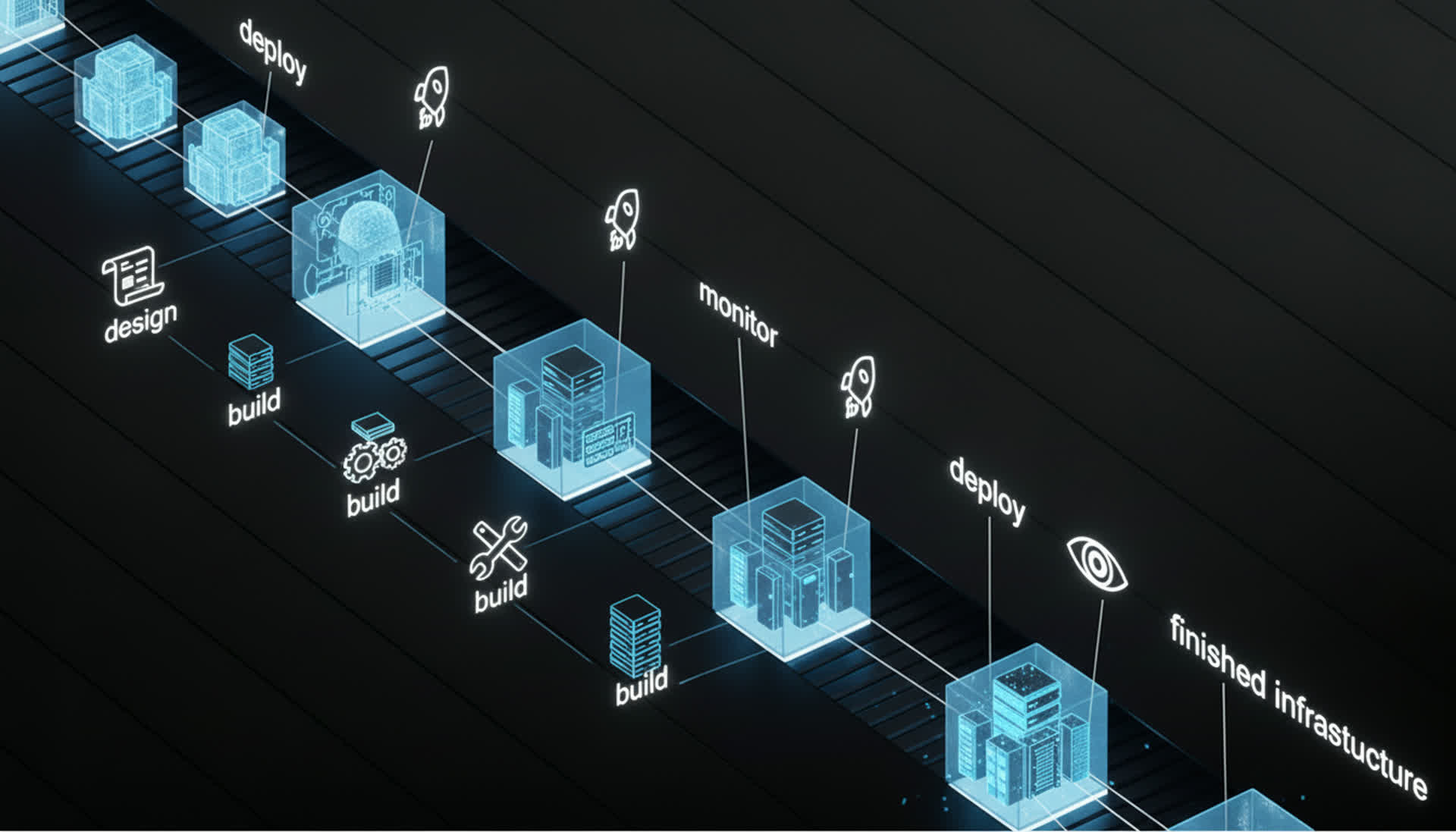
Reading the physical world through every available signal — satellites, sensors, drones, and networks fused into one live model.
Agentic Reasoning
AI agents that reason about space the way humans do — through geometry, time, and context.
Machine Action
Closing the loop: systems that move, build, and operate at the speed of compute.
Nexma's Definition of Spatial Intelligence
This is what we do. This is more than building AI for the world. This is building the world to respond to it.
Ours is a discipline focused on hope for every system, regardless of how analog it has been. This is the dawn of a new operating layer for the physical world — engineered by Nexma.
Building Spatial General Intelligence for the world today.
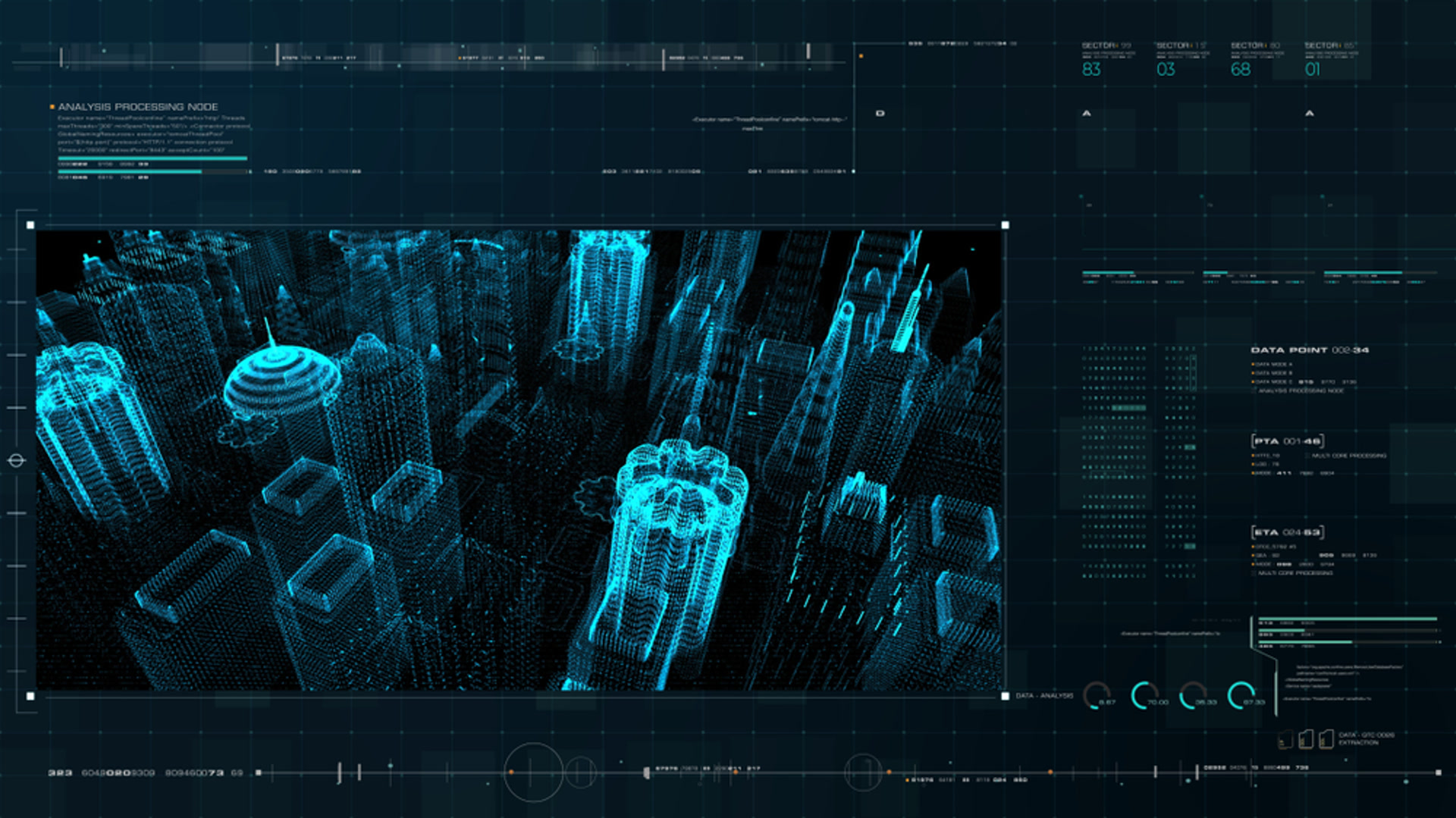
At Nexma, spatial general intelligence is more than bringing AI to the world's surface. It is rebuilding how the world gets read, reasoned about, and acted on. Instead, we are going further.

Instead, we are going further.
We are developing core technologies for the agents, models, and infrastructure that read the physical world.
We are elevating expectations for AI by building systems that operate at the speed of compute across every spatial domain.
We are repositioning every industry that depends on the ground beneath it to thrive in a world programmed by software.
ApplyingThe Science
Nexma's approach is entirely novel and not one of porting traditional GIS or piping geospatial data through general-purpose models. Although the existing toolchain remains useful for many forms of software, it is currently impossible to build agents that perceive, reason, and act in physical space without a new foundation layer. Nexma paves that foundation.
Our work paves the way for off-the-shelf agents that operate directly on the world today — designing networks, monitoring grids, defending territory, and routing logistics at the speed of compute. Every breakthrough we ship is a foundation other companies, operators, and governments can build on.
By engineering software that reads, reasons, and acts in space, Nexma equips every industry that depends on the ground beneath it with the speed and adaptability that software has always promised but the physical world has never received.
Super powering
spatial work
for today's world
A LookAt the PhysicalWorld.
The physical world, as it pertains to software, has been defined as everything beyond the screen. It is shaped by atoms not bits, by permits not packets, by trucks not threads — and it is the layer that has remained stubbornly outside the reach of digital intelligence.
Of all the bottlenecks slowing the digital revolution from reaching the world's surface, the most acute is the human one. Every survey, every dispatch, every permit, every site-walk runs at the speed of a clipboard — a destructive friction inside a software era that ships in seconds.
Software as we know it iterates incredibly quickly. The physical systems it touches do not. The gap between them is the addressable surface area of Spatial General Intelligence.
“The physical world is not wired for AI yet.”

For the gap between digital intelligence and the physical world to suddenly close, there has to be some other force at play. Judging by the convergence of agent maturity, sensor cost, and ground-level data availability, the root cause is identifiable as the arrival of a new kind of software: one that perceives, reasons, and acts in space the way human operators always have — only faster, cheaper, and continuously.
The loss of spatial intelligence as a hand-crafted, human-paced discipline is difficult to define as detrimental. In many ways the world is in equilibrium with the way humans have always operated it — replacing one inefficiency with another, slowly, over decades.
Rather, when a system is forcibly removed from human-paced operations and given over to software, the gain is more accurately described as the arrival of an entirely new operating layer. Every grid, every survey, every dispatch is part of the same fabric — and Nexma is engineered to operate that fabric.
“I've dedicated my career to building systems that move at the speed of intelligence. Not only for the parts of the world that already do, but for the parts the world depends on.”
Nexma represents the intersection of cutting-edge AI research and operational software that gets shipped into the real world. I am excited to be part of Nexma's mission and vision for closing the gap between digital intelligence and the physical layer that everything else depends on.
According to leading
industry analysts;
of spatial work is still manual.
of spatial decisions lack live data.
average lifecycle of an infrastructure project.
annual gap in global infrastructure investment.
Industry analysts predict that up to
Two-thirds of the world's spatial workload
will be done by AI agents within the next decade.
Miles of new infrastructure
are needed every single year.
And over 80% of the work
will still be done by hand.
[TBD-STAT] industries still rely on hand-collected survey data.
[TBD-STAT] of utility ops still run on paper-based dispatch.
[TBD-STAT] of capital projects deliver late due to manual planning.
Industry-leading analysts estimate
[TBD-CAT] of all spatial decisions made without live data.
[TBD-CAT] of physical assets operate without continuous monitoring.
[TBD-CAT] of industrial sites still depend on human inspection.
Experts summarize the current gap between AI and the physical world as a shift that is actively underway.
last
Industry analysts estimate that
50%OF THE WORLD'S CRITICAL INFRASTRUCTURE IS OPERATED BLIND.
[TBD-STAT] No live sensor feed, no continuous monitoring, no agent in the loop.
At a rate
10 timesHIGHER THAN POSSIBLE FOR HUMAN-PACED OPERATIONS.
[TBD-STAT] Agent-driven workflows execute at compute-time, not clipboard-time.
Authoritative reports show that
40%OF EARTH'S DEVELOPED LAND IS RUN BY ANALOG SYSTEMS.
[TBD-STAT] Up from only single-digit percent of digital coverage in 1970.
Climate reports estimate that
50%OF EARTH'S LAND MASS WILL BE RE-ENGINEERED IN THIS CENTURY.
[TBD-STAT] To adapt to a changing climate and a growing population.
The list goes
on and on.
Let the world move at the speed of mind.
The Gap
software got agents. the physical world didn't.

And Nexma is the company that will close it.
Combining spatial intelligence with autonomous engineering, we are building the layer where AI finally reaches the world it describes. To see networks design themselves. To see grids reroute around storms in seconds. To see territory defend itself and ecosystems heal themselves. To advance every industry that depends on the physical world — telecom, energy, defense, conservation, logistics — and to give the world a software-paced future. So the world can build, defend, and discover at the speed of intelligence.
A BETTER WORLD
| THE WORLD WE'RE BUILDING TOWARD |
Loyal to the
physical world.
For the first time, the planet has the capacity to respond to itself at the speed of compute. Nexma is the foundation that lets it. This is not an option for the century ahead — it is the obligation of it.
MISSION SUBSET 001
FOR THE PLANET.
FOR THE PEOPLE.
FOR THE FUTURE.
WE ARE BUILDING
FOR THE SAKE OF
TOMORROW.
Human enterprise built the modern world. It also stranded most of it without intelligence. Nexma is the foundation that closes that gap — not by replacing what humans built, but by letting it finally respond.


“Since the industrial era we have built a world that runs on human attention. The unspoken cost has been everything we couldn't watch closely enough. What changes now is not the machines themselves — it is that the planet finally gets a layer of intelligence that scales the way the problems scale. That is not a tool. That is a new foundation for the world.”
[NAME TBD]
[TBD-TITLE], [TBD-AFFILIATION]

OUR LONG
DEFICIT.
It is time to stop describing the gap and start closing it. The infrastructure humanity built no longer responds at the speed of the problems it faces. Networks fail without warning. Disasters outrun the dispatch. Designers spend decades on what compute could close in days. This is the deficit Nexma exists to retire.
FIG. 0001 · THE PHYSICAL-WORLD INTELLIGENCE DEFICIT

REF 0002 · STATUS-QUO LANDSCAPE
All of these are byproducts of a world that runs on human attention. The cost compounds. The fix is not more human attention — it is a foundation that watches, reasons, and acts at the rate the problems demand.
- INFRASTRUCTURE PAST DESIGN LIFE
- DISASTER RESPONSE LAG
- DESIGN BY HAND
- ENERGY WASTE AT SCALE
- THE HUMAN BOTTLENECK
These are just five symptoms — out of thousands.
We have already proven the alternative works. The question is no longer whether spatial intelligence can run a planet — it is how fast we deploy it.
The estimated capital required to bring global infrastructure to standard.
GLOBAL INFRASTRUCTURE DEFICIT$[TBD]T
The skilled engineers the world needs over the next decade.
ENGINEERING SHORTAGE[TBD]M
Time to design and deploy critical infrastructure today.
DESIGN-TO-BUILD CYCLES[TBD] YRS


AUTONOMY
REALLY
WORKS.
AUTONOMY:THE DEPLOYMENT OF SPATIAL INTELLIGENCE THAT DESIGNS, DISPATCHES, AND CLOSES THE LOOP WITHOUT HUMAN HANDOFF.
Thoughtful spatial intelligence has already produced impossible results. Take the autonomous redesign of a multi-state fiber backbone as an example.
Early in the project, the manual design process was failing in exactly the way most critical infrastructure fails today. Hand-drawn surveys. Spreadsheets routed by email. Constraint checks performed twice and still missed. Every cycle of the design queue cost weeks. Every revision cost more.
Nexma deployed Jax. The agent ingested the site survey, ran constraint validation against the active ontology, dispatched solvers across the network, and produced a complete buildable design overnight. Field crews received turn-by-turn task packages with the sunrise.
This would all change.

The effects rippled through the entire program. Backlogs cleared. Quality went up because constraint enforcement became automatic. Crews stopped re-doing each other's work because the dispatch was atomic. The deployment that was supposed to take three quarters shipped in nine weeks — and the customer started routing the next two regions to Jax before the first one was even complete.
A study by [TBD-SOURCE] concludes that:
AT LEAST
[TBD] PROJECTS
HAVE BEEN BUILT WITH MASS AGENTIC AUTONOMY
LET THE BUILD CONTINUE.
So, we can now answer this question. Across operations, defense, energy, and infrastructure, the foundation has shipped. The deployments are real. The compression of design-and-build cycles is measurable. And the work compounds.

“CAN THE GAP
LEFT BY HUMAN
ATTENTION BE
CLOSED?”
The answer is yes.
The answer is networks autonomously designed by agents, disaster response that begins before the dispatch call, and infrastructure that maintains itself. When we focus on building foundational intelligence — not point tools — we get results. Spatial autonomy is real and shipping, and growing more capable with every deployment, every dataset, every dispatched agent.
ADVANCING
SPATIAL
INTELLIGENCE
& AUTONOMY

“The physical world is the largest software target ever defined. The foundation that addresses it will be the most important piece of infrastructure built this century.”
— [NAME TBD]
While we may still be discovering the limits of digital intelligence, the boundary that matters most is the one between intelligence and the physical world. Spatial intelligence is the foundation that crosses it. It is the mechanism by which a planet becomes responsive to itself. This is the key — advancing the foundation of spatial autonomy. It is our core mission and the center of everything we do.
- 001
DataStore shipped as a real persistent file system that AI reads and writes fluently — proving the world model can scale beyond the in-memory toy.
- 002
Jax extended into Operations and Investigation, demonstrating that one platform generalizes across spatial domains with only ontology + skill swaps.
- 003
The 6-family solver architecture proved end-to-end across [TBD] domains, dispatching MIP / VRP / CP / simulation / heuristic / graph at the right tier automatically.
- 004
Real-time crew tracking and field replanning shipped on mobile, closing the design → dispatch → execution loop without a human handoff.
- 005
The agentic engineering pipeline produced [TBD-COUNT] auto-designed networks across [TBD-COUNT] customer sites — designs a human team would have shipped in years, compressed to hours.

JAX
INNOVATING
A BETTER FUTURE

A better world starts today. With us. With you. And every time we deploy a Jax agent, every time the DataStore absorbs a new layer of reality, every time a customer ships infrastructure on a timeline that used to be impossible — we get one step closer.
We have already established that human attention and human craftsmanship are admirable and effective. But humans cannot scale to the rate of the problems any further. What we can do is build the foundation that amplifies them — and turn back the clock on the physical-world deficit that the last century built.

IT'S A
BETTER
WORLD
WHEN WE
ALL WORK
TOGETHER.
THOUGHTFUL
AUTONOMOUS
BUILDING
&
STEWARDSHIP
OF TOMORROW.
BACKING UP THE WORLD
[ NEXMA BELIEF SYSTEM ]
“A complete model of the physical world is the only foundation worth building on.”
A world model has to do more than store dots on a map. Nexma is closing the gap between how software represents code and how the physical world represents itself — building a complete, queryable, agent-writable model of roads, grids, networks, buildings, terrain, and the systems that connect them. The goal is simple: no part of the world ever falls out of range of intelligence again.


This fact drives our work toward building the foundation beneath every physical operation today. Restoring the responsiveness of the physical world is a direct prerequisite to every other ambition humanity has — energy, climate, infrastructure, defense, exploration. Without the foundation, every other layer of intelligence we've built keeps running into the same wall.
CLOSE
THE GAP.
Modern leaps in agent reasoning, world modeling, and spatial computation have made the responsive physical world an operational reality at Nexma. To build a better one we have to push the first agent into the field — that is how the ripples start.